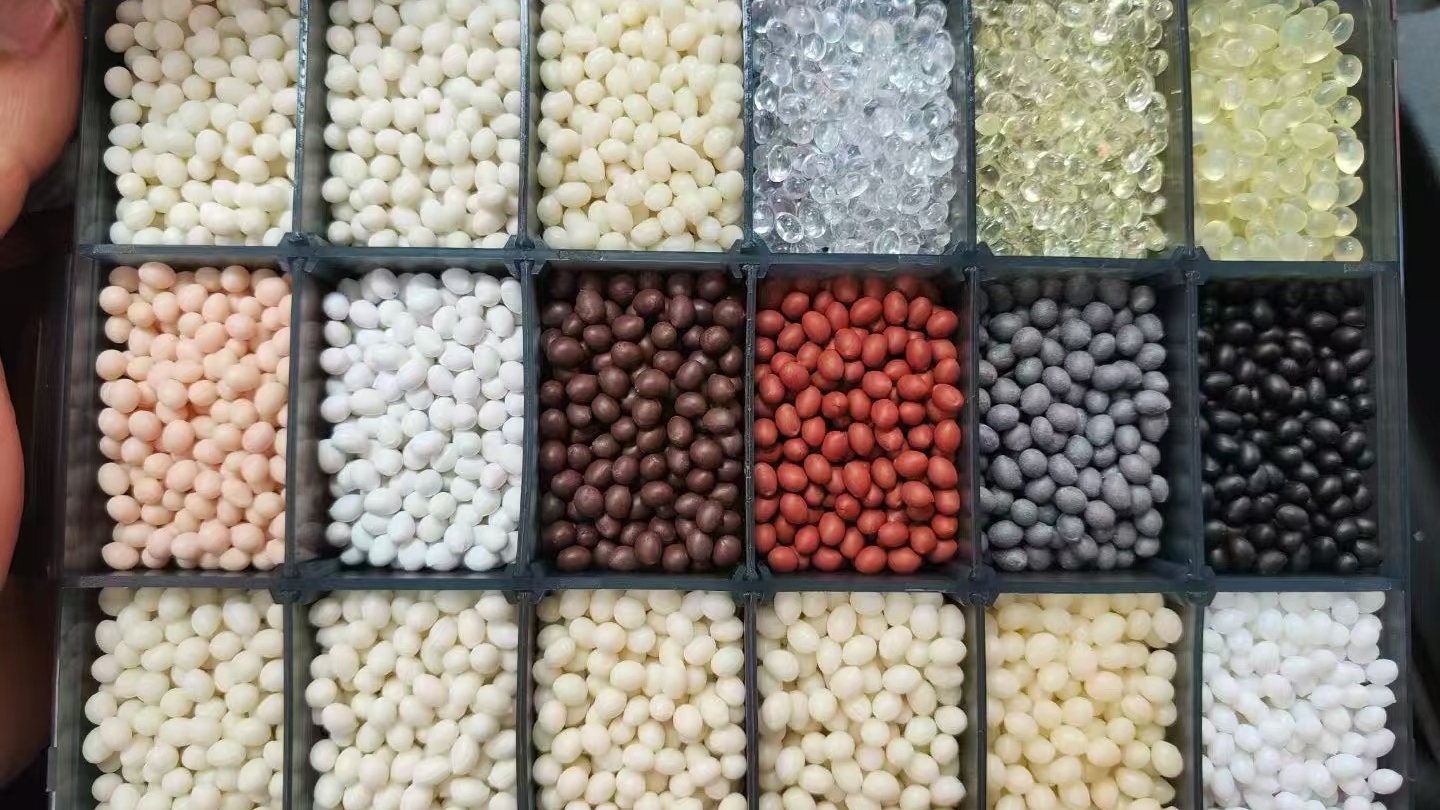
When furniture manufacturers and purchasing teams look for EVA hot melt adhesive for edge banding, one of the most common questions is whether the adhesive is compatible with their specific edge banding machine.
With more than 15 years of experience in hot melt adhesive production and application, we help customers select the right EVA edge banding adhesive according to their equipment and production requirements. Key factors include the type of edge banding machine, manual, semi-automatic, or fully automatic, as well as the board material, edge banding material, and the type of furniture being produced.
In this guide, we explain how to choose the right EVA hot melt adhesive for different types of edge banding machines and production applications.
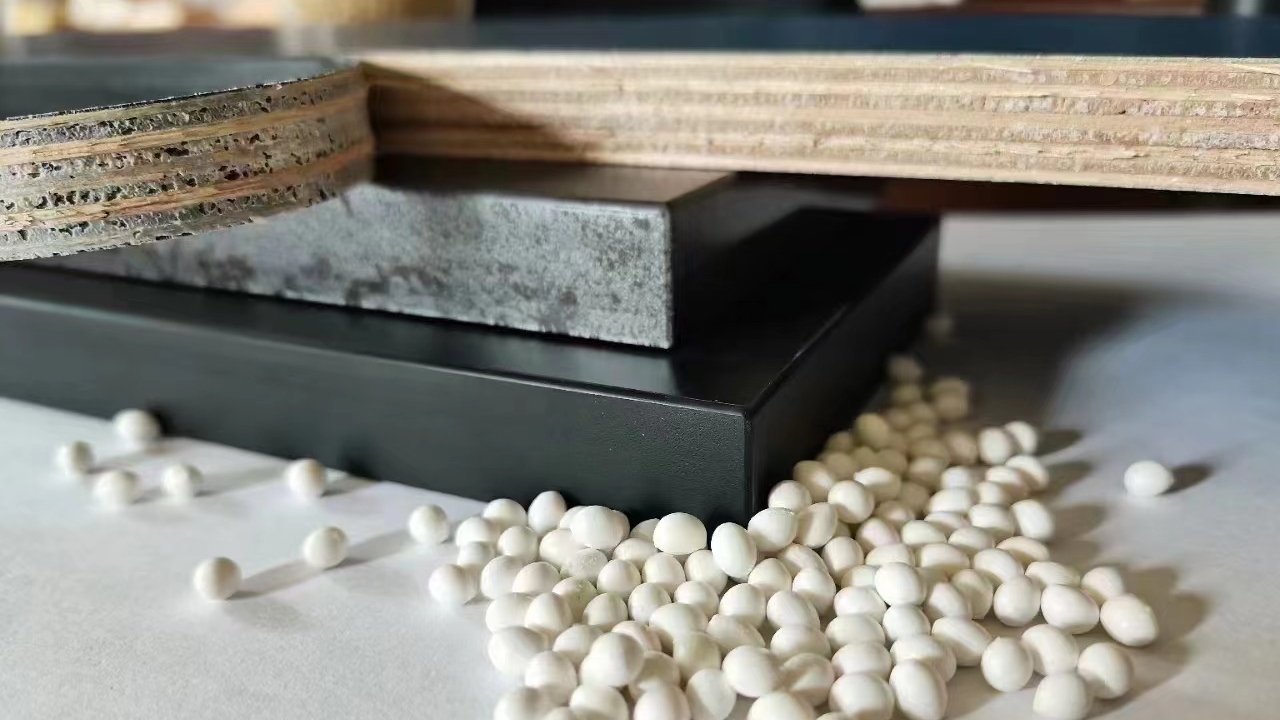
1. Types of edge banding machines
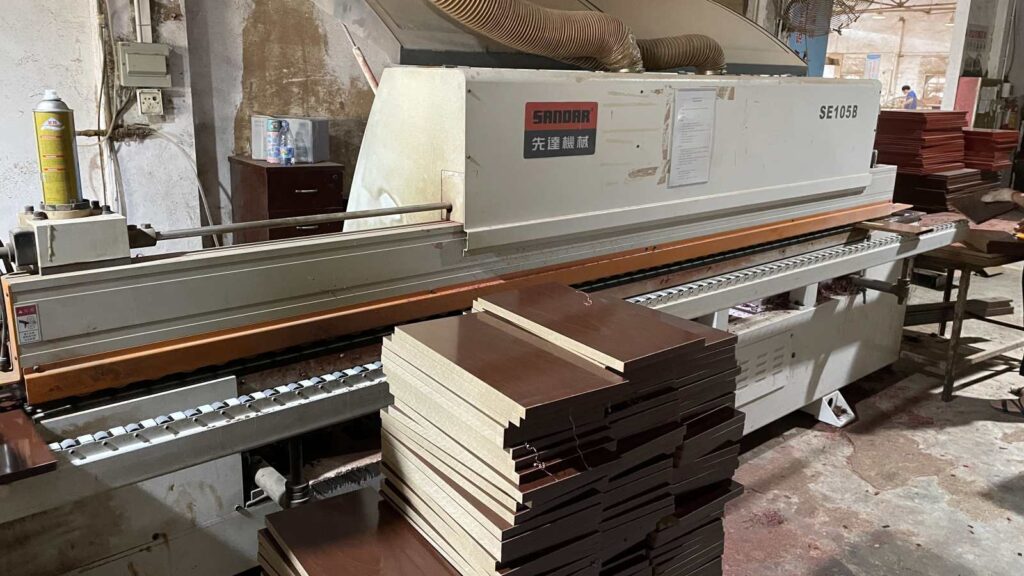
Furniture factories commonly use three types of edge banding machines: fully automatic, semi-automatic, and manual machines. The machine type and actual operating speed have a direct impact on the selection of EVA hot melt adhesive for edge banding.
1. Fully automatic edge banding machines
Fully automatic edge banding machines are widely used in large furniture factories where high production efficiency is required. These machines typically operate at speeds of more than 25 meters per minute and feature automatic panel feeding and edge banding systems.
For high-speed edge banding applications, the EVA hot melt adhesive needs to wet the board and edge band quickly and develop sufficient bond strength within a short processing time. Typical requirements include a short open time, fast setting speed of around 3–5 seconds, and relatively high viscosity, such as 60,000–90,000 cps at 200°C.

2. Semi-Automatic edge banding machines
Semi-automatic edge banding machines are commonly used in small and medium-sized furniture workshops. They generally operate at around 15–25 meters per minute and require some manual handling during the production process.
Because the operating speed is moderate, the EVA edge banding adhesive needs a balanced open time, setting speed, and viscosity. Typical adhesive requirements are an open time suitable for medium-speed production, a setting time of around 5–10 seconds, and a viscosity of approximately 40,000–60,000 cps at 200°C.
These machines can be used with different panel sizes and edge banding materials, making adhesive selection particularly important when production requirements vary.
3. Manual edge banding machines
Manual edge banding machines are generally used for small-batch production, on-site repairs, custom furniture components, and applications involving irregular shapes or curved edges. Their operating speed is usually below 15 meters per minute.
Since the application speed is slower, the EVA hot melt adhesive normally requires a longer open time to give the operator enough time to position the edge band accurately. A typical setting time is more than 10 seconds, with a relatively low viscosity of around 10,000–25,000 cps at 180°C.

Choose the Adhesive Based on Actual Machine Speed
When selecting an EVA hot melt adhesive for edge banding, furniture manufacturers should consider the actual operating speed of the machine rather than relying only on the speed shown on the machine’s nameplate.
For example, a fully automatic edge banding machine may be capable of operating at more than 25 meters per minute, but if the current production volume is low, the operator may run the machine at a slower speed. In this case, the adhesive requirements may be different from those of a high-speed production line.
2. Board types
Common board materials used for furniture and edge banding include particleboard, MDF (medium-density fiberboard), plywood, OSB (oriented strand board), and aluminum honeycomb panels.
Particleboard and MDF have relatively porous surfaces, so the EVA hot melt adhesive needs good wetting and penetration properties to achieve a strong bond with the board substrate.
Plywood and OSB can have different surface characteristics depending on their construction and surface treatment. Aluminum honeycomb panels, on the other hand, generally have a less porous surface and can be more challenging to bond. For these materials, an EVA edge banding adhesive with good initial tack and strong adhesion is often required.
For this reason, it is important to tell your hot melt adhesive supplier what type of board you are using. The board material can affect the adhesive’s wetting, initial tack, setting speed, and final bonding performance.

3. Edge banding material types
Common edge-banding materials include PVC, ABS, PP, and wood veneer. Each material has different surface characteristics, which can affect the performance of the EVA hot melt adhesive.
PVC edge banding is widely used in furniture production and generally offers good compatibility with EVA hot melt adhesives. ABS and PP edge banding can require higher initial tack and good adhesion, particularly when the production line is running at higher speeds.
Wood veneer and other porous edge-banding materials have a different surface structure and may require an adhesive with good wetting and penetration properties to achieve consistent bonding.
Therefore, the type of edge-banding material is an important factor when selecting an EVA hot melt adhesive.

4. Furniture types
Furniture manufacturers commonly produce cabinets, wardrobes, office furniture, doors, and other panel-based products. From the perspective of edge-banding adhesive selection, furniture applications can also be considered based on the width and size of the edge being bonded.
For example, narrow edges, typically less than 40 mm wide, generally have different adhesive requirements from wider edges, such as furniture doors and large panels that are more than 40 mm wide.
Wide-edge applications require an EVA hot melt adhesive with good melting performance, fast wetting, and strong initial tack. Because a larger edge surface needs to be bonded, the adhesive must spread evenly and build sufficient initial adhesion within a short period of time. If the adhesive does not wet the surface properly or develop enough initial tack, the edge band may lift or detach during the bonding process.
For narrow-edge applications, the adhesive requirements are generally less demanding.
How to choose the right EVA edge banding adhesive
In summary, four key factors should be considered when selecting an EVA hot melt adhesive for furniture edge banding:
- Edge banding machine – including the machine type and actual operating speed.
- Board material – such as particleboard, MDF, plywood, OSB, or aluminum honeycomb panels.
- Edge-banding material – such as PVC, ABS, PP, or wood veneer.
- Furniture application – including cabinets, wardrobes, office furniture, doors, and other products with different edge widths and bonding requirements.
There is no single EVA edge-banding adhesive that is ideal for every machine and application. The right adhesive should be selected according to the actual production conditions.
If you are a purchasing manager or procurement professional at a furniture factory and are not sure which EVA hot melt adhesive is suitable for your edge banding machine, feel free to contact us. Based on your machine speed, board material, edge-banding material, and application requirements, we can help recommend a suitable EVA edge banding adhesive for your production line.